Extreme Programming vs Scrum
12 min read


Extreme Programming vs Scrum: Unpacking the Difference Between Scrum and XP for Agile Software Development
Today, agile software development, Scrum and Extreme Programming (XP) stand out as two of the most effective agile methodologies. While both are rooted in the agile philosophy of iteration, collaboration, and rapid feedback, they serve distinctly different purposes. Scrum is a lightweight framework focused on project management, delivery cadence, and team organization, whereas XP is a demanding, developer-centric set of engineering practices aimed at improving code quality and technical agility.
This article will illuminate the key differences between these two powerful tools. We will answer the crucial questions of scrum vs xp, detailing their core components, from the scrum framework's defined roles to XP's rigorous pair programming and test-driven development (TDD). By understanding the unique strengths of scrum and extreme programming, you will be able to choose between scrum and xp and select the optimal approach for your software development needs.
Article Outline
What is Scrum and How Does its Framework Structure Product Development?
What is Extreme Programming (XP) and What is its Focus on Engineering Practices?
What is the Key Difference Between Scrum and XP in Scope and Application?
How Do the Roles of the Product Owner and Scrum Master Differ from the XP Team Structure?
How Does the Sprint in Scrum Compare to the Iteration in XP?
What is the Importance of Pair Programming and Test-Driven Development (TDD) in XP?
How Do Scrum and XP Address Technical Debt and Code Quality?
What are the Differences Between Scrum and Extreme Programming in Documentation and Planning?
In What Scenarios Should a Team Choose Scrum or XP?
How Can Teams Successfully Combine the Strengths of Scrum and XP?
What is Scrum and How Does its Framework Structure Product Development?
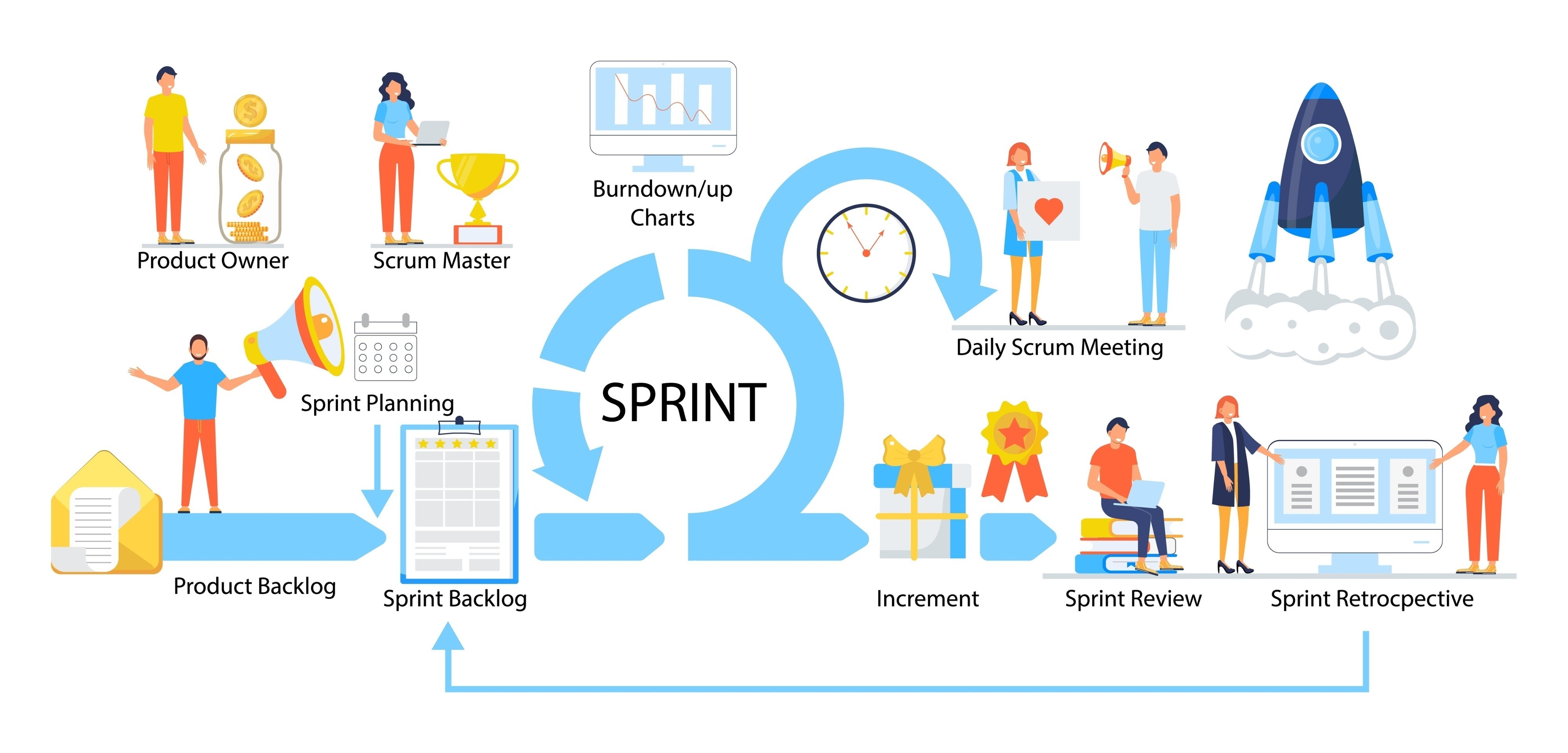
Scrum is the most popular agile framework used today, primarily focused on project management and coordinating work in complex product development environments. Scrum achieves its structure through a set of defined roles, events, and artifacts, as laid out in the Scrum Guide. It provides a clear, rhythmic cadence for the development team to inspect and adapt its work and processes.
The scrum framework mandates three roles: the Scrum Master, the Product Owner, and the Scrum Team (development team). The Product Owner is responsible for maximizing the value of the product resulting from the work of the scrum team, largely by managing and prioritizeing the Product Backlog. The Scrum Master is responsible for ensuring scrum is understood and enacted, acting as a coach and facilitator.
Work is organized into fixed-length timeboxes called sprints (typically 2-4 weeks). Each sprint begins with sprint planning and concludes with a sprint review for stakeholders and a retrospective for the scrum team to focus on continuous improvement. Scrum is all about what to build and when to deliver it, not how to write the code.
What is Extreme Programming (XP) and What is its Focus on Engineering Practices?
Extreme Programming (XP) is a rigorous agile framework that focuses almost entirely on technical practices and software engineering excellence. XP’s name comes from the idea of taking agile principles (like iteration and feedback) to an "extreme" level through strict XP rules and practices. While scrum defines the organizational workflow, XP defines the mandatory technical execution required to achieve high software quality.
The central premise of XP is that the cost of fixing a bug increases the longer it remains in the system. Therefore, XP mandates constant feedback loops, not just from the customer, but within the code itself. Its most famous practices in xp include pair programming, test-driven development (TDD), continuous integration, and frequent small releases. These engineering practices are designed to improve code quality and maintain agility throughout the project.
The focus of xp is less on team organization (which it leaves flexible, often using a single xp team lead) and more on the developer's daily process. By embedding technical practices like TDD and continuous integration, XP dramatically reduces the accumulation of technical debt, ensuring that the development team can adapt to change quickly without the code base collapsing.
What is the Key Difference Between Scrum and XP in Scope and Application?
The key difference between Scrum and XP lies in their primary focus and scope. Scrum is a framework for product development and project management that manages the what and when of delivery. Its core concern is the flow of product backlog items into delivered increments of working software. The scrum framework is intentionally silent on specific engineering practices.
XP, on the other hand, is a collection of mandatory engineering practices that focuses on the how of software development. It specifies how the developers should write code (pair programming), how they should test (test-driven development), and how they should integrate their work (continuous integration). The difference between scrum and xp is thus the difference between a project management model and a technical execution model.
In application, Scrum can be used for any complex project, including marketing or HR, because its rules are organizational. XP is specifically for agile software development because its rules—like TDD and pair programming—are inherently tied to coding and software engineering. The goal of XP is high software quality; the goal of Scrum is predictable delivery.
How Do the Roles of the Product Owner and Scrum Master Differ from the XP Team Structure?
The roles vs scrum are highly defined and specific, while XP deliberately keeps its team structure minimal. In scrum, the Product Owner is the single authority for the product, responsible for the Product Backlog and ensuring the development team works on the highest-value items. The Scrum Master is a servant-leader focused on the scrum process itself, removing impediments and coaching the scrum team.
XP typically defines just one overarching manager or lead, often an XP team lead, and focuses on self-organizing developers. It does not have dedicated roles like the Scrum Master or the Product Owner. The customer (or customer representative) is expected to be an integral, full-time team member, directly responsible for providing and clarifying user stories. This differs significantly from the scrum perspective where the Product Owner acts as the single interface to the stakeholder.
This difference highlights the primary focus of each framework. Scrum invests in organizational clarity with roles like the Scrum Master and Product Owner to coordinate complex product delivery. XP invests in technical clarity by embedding the customer directly with the developers and relying on intense collaboration like pair programming among developers.
How Does the Sprint in Scrum Compare to the Iteration in XP?
Both Scrum and XP utilize time-boxed periods of work to achieve agility, but they treat these periods slightly differently. The sprint in scrum is a fixed timebox, usually 2-4 weeks, that serves as a container for all scrum events and the delivery of a usable product increment. Scrum demands that the sprint goal remains stable once set during sprint planning.
XP also uses a fixed-length timebox, which it calls an iteration, typically lasting 1-2 weeks. While both the sprint and the iteration provide a rhythmic cadence, XP’s iterations are generally shorter than scrum's sprints, reflecting XP's emphasis on even tighter feedback loops and smaller releases. The core difference is that XP is slightly more flexible regarding scope change within an iteration than scrum is within a sprint.
Furthermore, the iteration in XP is often followed by a small, immediate release into production, whereas a sprint in scrum ends with a sprint review and the decision to deploy may be separated from the end of the sprint. Both, however, are followed by a retrospective (or its equivalent in XP) to focus on continuous improvement of the development process.
What is the Importance of Pair Programming and Test-Driven Development (TDD) in XP?
Pair programming and test-driven development (TDD) are two non-negotiable engineering practices that are central to XP’s success and high software quality. Pair programming involves two developers working together at one workstation on the same code. One developer writes the code (the driver), while the other continuously reviews it and suggests improvements (the navigator).
The importance of pair programming is that it provides immediate, continuous code review, leading to fewer bugs, better design, and faster knowledge transfer among team members. It's a proactive approach to code quality that scrum does not mandate. Similarly, test-driven development (TDD) requires the developer to write an automated test before writing the minimal amount of code necessary to pass that test.
This tdd cycle (Red: Write the failing test; Green: Write the code to pass the test; Refactor: Improve the code) ensures that every line of code is covered by a test and forces a clearer focus on the software design and simplicity. These xp practices are technical commitments that guarantee the quality of the software is built in, not tested in later.
How Do Scrum and XP Address Technical Debt and Code Quality?
The approaches of scrum and xp to addressing technical debt and code quality reveal their differences in focus. Scrum, being a process framework, does not prescribe technical practices to prevent technical debt. From a scrum perspective, the scrum team is expected to manage technical debt by incorporating it into the Product Backlog as a set of product backlog items to be prioritized by the Product Owner.
XP takes a direct, aggressive approach to minimizing technical debt. It mandates technical practices like pair programming, test-driven development (tdd), continuous integration, and constant refactoring. These practices ensure that the developers are continuously improving the internal structure of the code, preventing technical debt from accumulating in the first place. The xp rules and practices are essentially a full-frontal attack on poor code quality.
To successfully manage a modern software development project, it is often necessary to combine the two. The scrum framework provides the mechanism for the business to prioritize and fund the technical cleanup (by including it in the sprint backlog), while XP provides the mandatory specific engineering practices to ensure the cleanup is effective and that new debt is not inadvertently created.
What are the Differences Between Scrum and Extreme Programming in Documentation and Planning?
Scrum and extreme programming also differ in their approach to documentation and long-term planning. Scrum emphasizes a few core artifacts: the Product Backlog and Sprint Backlog. The Product Backlog serves as the primary, living documentation of what the product should do. Scrum’s planning is continuous: high-level during sprint planning and detailed for the current sprint.
XP is famous for its very minimal, highly oral documentation style. It relies heavily on user stories written on simple cards and the concept of "collective code ownership" where the code itself is the ultimate documentation. XP's short, weekly iterations mean planning is done just-in-time, focusing heavily on what can be achieved in the next short timebox. The presence of pair programming also reduces the need for external design documentation.
While both are aligned with the agile value of working software over comprehensive documentation, XP pushes this to a greater extreme than scrum. Scrum provides just enough structure for a larger development team and stakeholder communication; XP relies on continuous, direct, and immediate communication between the developers (two developers at a time) and the on-site customer.
In What Scenarios Should a Team Choose Scrum or XP?
The choice of scrum or xp depends heavily on the project’s needs and the development team’s current maturity.
Choose Scrum if your primary challenge is project management, coordination, stakeholder alignment, and delivering a large, complex product with multiple features at a predictable cadence. Scrum’s defined roles (like Product Owner and Scrum Master) and events provide the necessary organizational control.
Choose XP if your primary challenge is low software quality, high technical debt, volatile requirements, or the need to integrate technical excellence into the core of your agile approach. XP is best for small to medium-sized cross-functional teams building entirely new or highly innovative systems where the technical risk is high.
Often, the decision isn't vs scrum, but which one should take the lead. For a large enterprise product development effort, scrum is the better choice for the overarching framework. For a highly technical component of that effort, adopting the xp practices like pair programming and TDD within the scrum team's sprint can significantly improve the final outcome.
How Can Teams Successfully Combine the Strengths of Scrum and XP?
The most effective approach for many modern software development teams is to integrate the organizational strengths of Scrum with the technical rigor of XP. This synergistic combination is often referred to as scrum and xp or xp and scrum.
Teams can use the scrum framework for its delivery rhythm and structure: they use sprint planning to select product backlog items, they hold a daily scrum meeting for coordination, and they use the sprint review and sprint retrospective at the end of each sprint. This provides the necessary business and project management alignment.
Simultaneously, the scrum team adopts mandatory xp practices for its actual development process. This means all developers utilize pair programming, test-driven development (TDD), and continuous integration while working on the sprint backlog. This blend of scrum rules for project flow and xp rules and practices for technical execution results in high-quality working software delivered at a predictable pace. The combination ensures that the team has both great discipline in its software engineering and great alignment with its customer needs.
Key Takeaways: Scrum vs. Extreme Programming
Scrum is Organizational: Scrum is a framework focused on project management, roles (Product Owner, Scrum Master), events (sprint planning, daily scrum), and delivering value in time-boxed sprints. It answers what and when.
XP is Technical: Extreme Programming (XP) is a set of mandatory engineering practices focused on technical excellence, code quality, and immediate feedback loops. It answers how the developers write the code.
Key Difference: The difference between scrum and xp is that Scrum is a framework for product development across an organization, while XP is a set of specific engineering practices for a development team.
XP Practices: XP mandates rigorous practices like pair programming (continuous code review by two developers) and test-driven development (TDD) to aggressively prevent technical debt.
Combining Strengths: Most effective modern agile software development teams use Scrum for their workflow cadence (the sprint and retrospective) and adopt XP's technical practices for their development process to ensure high software quality.

Find Your Next Talent
Hire South Africans in Days not Weeks, and only pay after 4 weeks
Or schedule a call with Bojan.