PaaS vs IaaS vs SaaS: Understanding Platform as a Service and Types of Cloud Computing
12 min read


PaaS vs IaaS vs SaaS: Understanding Platform as a Service and Types of Cloud Computing
Cloud computing has revolutionized how businesses operate, offering unprecedented flexibility, scalability, and cost-efficiency. Understanding the difference between IaaS, PaaS and SaaS—the three main cloud service models—is essential for any organization looking to leverage cloud technology effectively. This comprehensive guide explores each type of cloud service, compares saas vs paas vs iaas, and helps you determine which cloud service model best fits your business needs.
Key Takeaways: Understanding IaaS, PaaS, and SaaS
The three main cloud service models—IaaS, PaaS, and SaaS—represent different levels of abstraction and management responsibility, with IaaS providing maximum control over infrastructure, PaaS offering development platforms, and SaaS delivering ready-to-use applications accessible through a web browser.
IaaS provides virtualized computing infrastructure including servers, storage, and networking, making it ideal for organizations needing custom configurations, variable workloads, or migration of existing applications while the cloud service provider manages physical hardware and virtualization.
PaaS enables developers to build and deploy applications without managing underlying infrastructure, providing runtime environments, development tools, and middleware that accelerate development cycles and support modern DevOps practices including continuous integration and deployment.
SaaS delivers complete software applications over the internet with zero installation or maintenance required from users, offering examples of saas like Microsoft Office 365, Salesforce, and Google Workspace that provide immediate productivity with subscription-based pricing.
The difference between iaas, paas, and saas lies in the division of responsibilities between cloud provider and customer, with each service model handling progressively more management tasks and reducing customer control while increasing convenience and reducing operational complexity.
Security follows a shared responsibility model where providers secure different layers depending on whether you use iaas, paas, or saas, but customers always retain some security obligations including access management, data protection, and proper configuration of cloud resources.
Hybrid cloud and multi-cloud strategies combine multiple types of cloud computing service models and providers to optimize costs, performance, and flexibility while avoiding vendor lock-in, though this approach requires careful governance and cross-platform expertise.
Each cloud service model suits different use cases: use iaas when you need infrastructure control and custom configurations, use paas to develop applications rapidly without infrastructure overhead, and choose saas when you need proven solutions to common business problems with minimal IT involvement.
The benefits of cloud computing extend across all service model types, including reduced capital expenses, rapid scalability, automatic updates, global accessibility, and the ability to take advantage of the benefits of enterprise-grade infrastructure without maintaining physical data centers or hiring specialized staff for routine management.
What Are the Three Main Cloud Service Models?
Cloud computing service models are typically categorized into three fundamental types: Infrastructure as a Service (IaaS), Platform as a Service (PaaS), and Software as a Service (SaaS). These models of cloud computing represent different levels of abstraction and control over computing resources, each serving distinct use cases and user requirements.
IaaS provides the foundational computing infrastructure, including virtual machines, storage, networks, and server resources hosted in a data center. This iaas model gives organizations maximum control over their cloud infrastructure while eliminating the need to maintain physical hardware. Major iaas providers like AWS, Microsoft Azure, and Google Cloud offer robust virtualization capabilities that allow businesses to scale resources on demand.
PaaS and SaaS build upon the infrastructure layer, offering higher levels of abstraction. Platform as a service provides developers with a complete environment to build, test, and deploy applications without managing underlying infrastructure. Meanwhile, software as a service delivers fully functional applications through a web browser, requiring no installation or maintenance from end users. Together, these cloud computing service models represent a comprehensive spectrum of cloud service solutions that can accommodate virtually any business need.
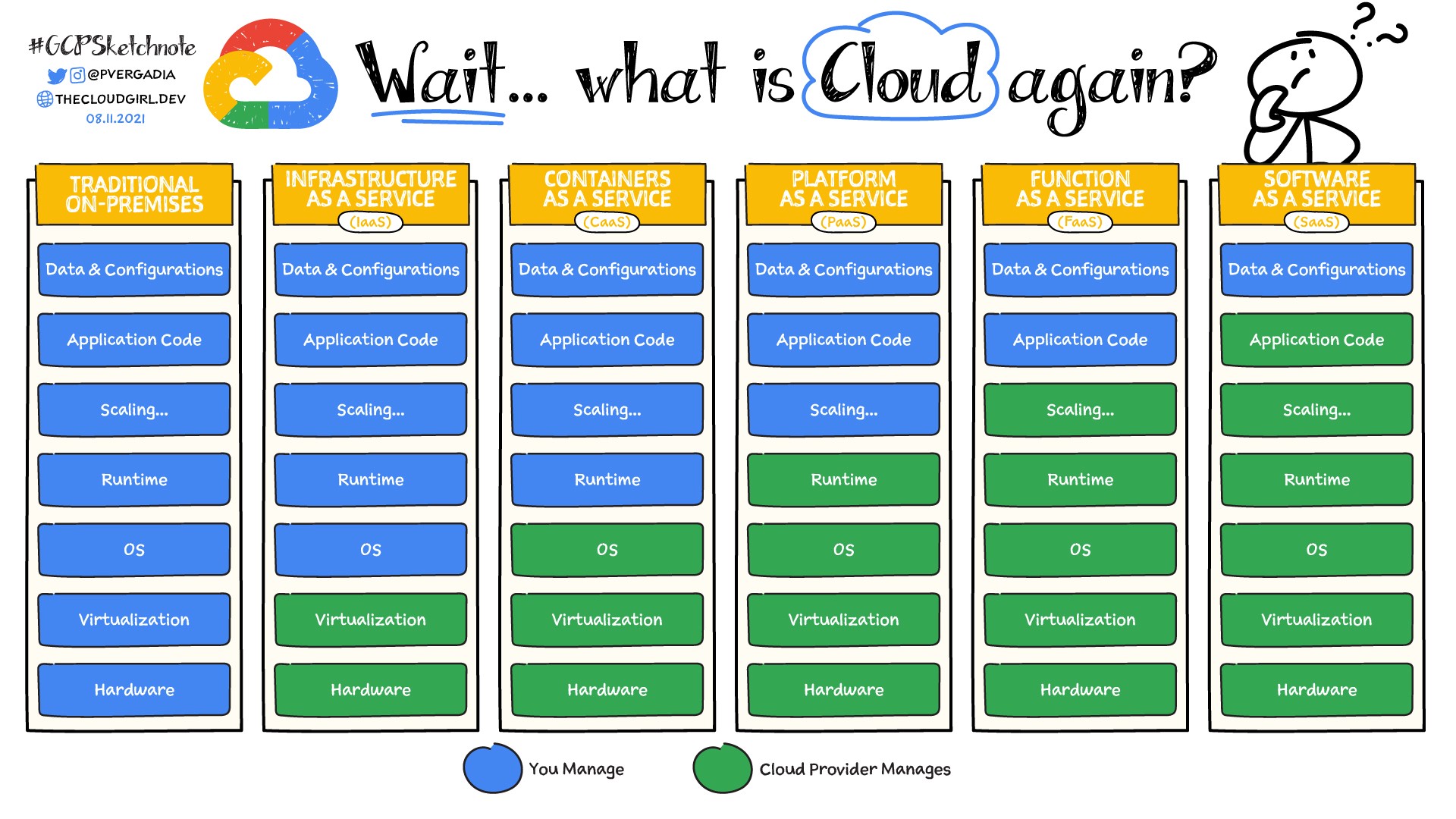
Checkout the below image and the full article curtesy of google here
How Does Infrastructure as a Service (IaaS) Work?
IaaS delivers fundamental computing resources over the internet on a pay-as-you-go basis. When organizations use iaas, they essentially rent virtualized hardware from a cloud service provider rather than purchasing and maintaining physical equipment in their own data center. This infrastructure as a service model offers maximum flexibility and control, making it ideal for businesses with specific technical requirements or existing applications that need migration to the cloud.
The way iaas works is relatively straightforward: the cloud provider manages the physical hardware, virtualization layer, and networking infrastructure, while customers control the operating system, storage, deployed applications, and possibly network configurations. Iaas gives organizations the ability to provision servers, storage, and networking resources within minutes, scaling up or down based on demand. This elasticity represents one of the key benefits of cloud computing, allowing businesses to avoid overprovisioning and reduce capital expenditure.
Iaas provides several compelling advantages for certain use cases. Development and testing environments benefit enormously from IaaS because developers can quickly spin up and tear down infrastructure as needed. High-performance computing workloads, disaster recovery solutions, and hosting websites or web applications are all scenarios where iaas offers significant value. Iaas customers appreciate the control they maintain over their environment while offloading the complexity of hardware management to the service provider.
Want us to build your SaaS? Check us out and book a free call
What Makes Platform as a Service (PaaS) Different?
Platform as a service sits between IaaS and SaaS in the cloud service model hierarchy, often described as an extension of iaas with additional abstraction. While IaaS provides raw infrastructure, paas provides a complete development and deployment environment in the cloud. This means paas offers not just infrastructure but also runtime environments, development tools, database management systems, and middleware that developers can use to create customized applications.
When you use paas, the cloud provider manages everything from servers and storage to networking, operating system, and middleware, allowing developer teams to focus exclusively on writing code and managing applications. This paas model dramatically accelerates development cycles because paas enables teams to bypass the time-consuming setup of development environments. Popular paas solutions like Heroku, Google App Engine, and AWS Elastic Beanstalk provide frameworks and tools that paas supports across multiple programming languages.
Looking for PAAS developers? Check us out and book a free call
The paas provider handles patching, updates, and infrastructure maintenance, which reduces operational overhead significantly. Paas allows organizations to deploy applications faster, scale automatically based on demand, and collaborate more effectively across distributed teams. Paas is best suited for scenarios involving custom application development, API development and management, or when organizations want to take advantage of the benefits of cloud computing without managing infrastructure complexity. Developers can use paas to build web applications, mobile backends, or microservices architectures efficiently.
How Does Software as a Service (SaaS) Deliver Value?
Software as a service represents the most abstracted form of cloud computing, delivering complete, ready-to-use applications over the internet. Unlike iaas and saas's infrastructure-focused cousins, saas provides fully functional software that users access through a web browser without installing anything locally. This saas model has become ubiquitous in both consumer and enterprise contexts, fundamentally changing how organizations consume software.
Saas leverages cloud infrastructure to host applications centrally, which saas providers manage entirely. Users simply log in and start working—no software installation, no updates to manage, no servers to maintain. Examples of saas include familiar applications like Microsoft Office 365, Salesforce, Slack, Zoom, and Google Workspace. These saas products demonstrate the versatility of the model, serving everything from communication and collaboration to customer relationship management and enterprise resource planning.
The saas offering model provides numerous advantages that explain its explosive growth. Saas provides immediate accessibility from any device with internet connectivity, automatic updates that ensure users always have the latest features, and subscription-based pricing that converts capital expenses to operational expenses. Saas users benefit from the provider's economies of scale, typically receiving enterprise-grade security, reliability, and performance at a fraction of the cost of self-hosted alternatives. For businesses, saas solutions eliminate the burden of software maintenance, allowing IT teams to focus on strategic initiatives rather than routine administration.
What's the Difference Between IaaS, PaaS, and SaaS?
Understanding paas vs iaas vs saas requires examining the control, flexibility, and management responsibilities each model offers. The fundamental difference between iaas, paas, and saas lies in what the cloud provider manages versus what the customer manages. This division of responsibilities follows a clear progression across the three models.
With iaas vs paas, the key distinction is infrastructure management. IaaS customers must manage operating systems, middleware, runtime environments, and applications, while the provider handles only the physical infrastructure and virtualization. In contrast, paas vs iaas shows that platform as a service removes these concerns—the paas provider manages everything up to the application layer. When comparing saas vs paas, the difference becomes even more pronounced: saas vs paas vs iaas demonstrates that SaaS eliminates virtually all management responsibilities, delivering complete applications that simply work.
The comparison of types of cloud computing also reveals different target audiences. Iaas appeals to system administrators and DevOps teams who need infrastructure control. Paas targets developers who want to focus on code without infrastructure concerns. Saas vs other models shows it serves end users who simply want to accomplish business tasks without any technical overhead. The choice between these cloud service model options depends on your organization's technical capabilities, control requirements, and whether you're building applications, running infrastructure, or simply using software. Each type of cloud service has its place in modern IT strategy.
When Should Organizations Use IaaS?
Organizations should use iaas when they need maximum control over their computing environment while avoiding the capital expense and complexity of physical infrastructure. The iaas model excels in scenarios requiring custom configurations, specific operating system requirements, or the ability to install any software stack. Companies migrating legacy applications to the cloud often choose IaaS because it allows them to replicate their existing environment with minimal changes.
Iaas offers particular value for businesses with variable workloads that benefit from rapid scaling. E-commerce sites experiencing seasonal traffic spikes, for instance, can use iaas to add server capacity during peak periods and reduce it afterward, paying only for what they use. Development and testing environments represent another ideal use case—teams can quickly provision infrastructure for testing, then tear it down when finished, avoiding the waste of permanently allocated resources.
High-performance computing, big data analytics, and disaster recovery solutions all benefit from the flexibility that iaas delivers. The ability to deploy resources globally also makes IaaS attractive for organizations expanding into new regions or needing low-latency access for distributed users. However, iaas gives users significant responsibility for security, patching, and management, requiring skilled IT staff to operate effectively. Organizations must weigh this operational overhead against the control and flexibility benefits when deciding whether to use the cloud in this manner.
What Are the Best Use Cases for PaaS?
Paas to develop applications represents perhaps the most compelling use case for platform as a service. When organizations need to build custom software quickly, paas enables rapid development by providing pre-configured environments, development frameworks, and automated deployment pipelines. This allows development teams to move from concept to production faster than traditional infrastructure-based approaches.
Paas to build and deploy APIs has become increasingly popular as organizations embrace microservices architectures and need to expose functionality to partners, mobile applications, or internal systems. The paas supports automatic scaling, which ensures APIs remain responsive under varying loads. Collaborative development scenarios particularly benefit from PaaS—distributed teams can access the same development environment and tools regardless of location, improving consistency and reducing "it works on my machine" problems.
Paas allows businesses to experiment with new technologies without significant investment. Developers can use paas solutions to test emerging frameworks, databases, or programming languages, determining viability before committing resources. DevOps practices like continuous integration and continuous deployment (CI/CD) integrate naturally with PaaS platforms, which often include built-in tooling for automated testing, version control, and deployment. Companies seeking to modernize application development practices while reducing infrastructure management overhead find that paas offers an optimal balance of control and convenience.
How Can Businesses Leverage SaaS Effectively?
The saas application model works best when organizations need proven solutions to common business problems rather than custom-built software. Productivity tools, communication platforms, customer relationship management, and collaboration software all thrive as saas solutions because they address universal needs with standardized functionality. Businesses can implement these applications rapidly—often within hours—compared to months required for traditional software deployment.
Saas provides numerous advantages for organizations with limited IT resources. Small and medium-sized businesses particularly benefit from saas products because they gain access to enterprise-grade applications without the infrastructure, licensing costs, or specialized staff required for on-premises alternatives. The subscription model also improves cash flow by replacing large upfront software purchases with predictable monthly or annual payments.
Organizations should strategically evaluate which functions to address with SaaS versus custom development using paas or infrastructure using iaas. Commoditized business functions—email, document collaboration, basic accounting—are excellent saas candidates. Highly specialized processes providing competitive differentiation may warrant custom development. The saas model also suits businesses prioritizing rapid deployment, automatic updates, and vendor-managed security over deep customization. Companies adopting SaaS should carefully review service level agreements, data security provisions, and integration capabilities to ensure selected saas providers align with organizational requirements and risk tolerance.
What Are the Security Considerations Across Cloud Service Models?
Security responsibilities shift dramatically across iaas, paas, and saas, following the "shared responsibility model" that governs cloud security. Understanding who secures what is critical for protecting data in the cloud and maintaining compliance with regulatory requirements. The cloud provider's role varies by service model, with customers always responsible for some aspects of security.
In the iaas model, customers bear significant security responsibilities. While the cloud service provider secures the physical data center, server hardware, and virtualization layer, customers must secure their operating system, applications, and data. This includes patching operating systems, configuring firewalls, managing access controls, encrypting data, and monitoring for security threats. Organizations using IaaS must have security expertise comparable to what they'd need for on-premises infrastructure.
Paas shifts more security responsibility to providers. The paas provider typically secures the platform infrastructure, runtime environments, and operating systems, while customers secure their applications and data. This reduces the customer's security burden but introduces dependencies on the provider's security practices. With saas, the provider handles nearly all security concerns, from infrastructure to application security, though customers retain responsibility for access management, data classification, and proper usage. Despite these provider protections, security risks exist across all models—data breaches, account compromises, and misconfiguration can occur. Organizations must evaluate cloud environments carefully, implement appropriate security controls, and maintain governance regardless of which cloud service model they adopt.
How Do Hybrid Cloud and Multi-Cloud Strategies Incorporate IaaS, PaaS, and SaaS?
Modern organizations rarely commit to a single cloud service model or provider. Instead, they adopt hybrid cloud approaches that combine on-premises infrastructure with cloud resources, or multi-cloud strategies leveraging multiple cloud service provider platforms. These approaches allow businesses to optimize for cost, performance, compliance, and flexibility while avoiding vendor lock-in.
A hybrid cloud strategy might use iaas for scalable computing capacity while keeping sensitive data on-premises, or use paas for new application development while maintaining legacy applications in traditional data centers. This architectural approach allows organizations to gradually migrate to cloud computing without disrupting existing operations. Applications run in the cloud during peak demand periods, then return to on-premises infrastructure during normal times, optimizing costs.
Multi-cloud strategies often combine services from different providers to leverage each provider's strengths. An organization might use AWS for iaas infrastructure, Google Cloud's paas solutions for application development, and various saas products for business functions. This approach mitigates risks associated with provider outages, allows negotiation leverage, and enables selection of best-in-class services. However, managing cloud environments across multiple providers introduces complexity in governance, security, and cost management. Organizations must develop clear policies for cloud service offerings selection, implement robust cloud management platforms, and ensure teams have skills across different cloud products and platforms to execute these strategies successfully.
What Does the Future Hold for Cloud Computing Service Models?
The evolution of cloud computing continues reshaping how organizations consume and deploy technology. While the fundamental models—infrastructure as a service, platform as a service, and software as a service—remain relevant, they're becoming increasingly sophisticated and specialized. The lines between service model categories blur as providers expand offerings and organizations mix approaches.
Serverless computing represents one emerging evolution, building on paas principles but removing even more infrastructure concerns. Developers write functions that execute in response to events without provisioning or managing servers at all. This form of cloud computing called "Function as a Service" extends the abstraction paradigm further. Container orchestration platforms similarly bridge iaas and paas, giving developers more control than traditional PaaS while reducing complexity compared to IaaS.
Artificial intelligence and machine learning capabilities are being integrated across all cloud service model tiers. Cloud providers offer AI/ML as a service, providing pre-trained models, training infrastructure, and deployment platforms that democratize advanced analytics. Edge computing is extending cloud resources closer to where data is generated, creating hybrid architectures that process information locally while leveraging centralized cloud infrastructure for heavy computation and long-term storage.
The ongoing evolution suggests organizations will increasingly use the cloud through varied service models, selecting the appropriate level of abstraction for each workload. Understanding the core differences between saas, paas, and iaas remains essential even as the boundaries evolve, providing the conceptual framework for evaluating new cloud service offerings and making strategic technology decisions. Organizations that take advantage of the benefits each model offers while maintaining flexibility will best position themselves for whatever innovations emerge in cloud computing.

Find Your Next Talent
Hire South Africans in Days not Weeks, and only pay after 4 weeks
Or schedule a call with Bojan.