Mastering Your Recruitment Processes with Recruitment Process Outsourcing (RPO Recruitment)
6 min read


Mastering Your Recruitment Processes with Recruitment Process Outsourcing (RPO Recruitment)
Trying to snag the best talent in today's talent market is exhausting, right? It puts a massive strain on internal recruitment and teams. If you've been struggling to recruit efficiently or feel like scaling your hiring is practically impossible, you're not alone. That's exactly why we need to talk about Recruitment Process Outsourcing (RPO). Think of this guide as your no-nonsense breakdown. We're going to understand RPO, speak to the benefits of RPO, walk you through the various types of RPO (yes there are multiple), and give you the essential advice for selecting the best RPO provider to actually meet your specific hiring needs.
Article Outline: Unlocking the Power of RPO
What is Recruitment Process Outsourcing and How Does It Fit into Modern Recruitment Strategy?
What Are the Main Benefits of RPO and Why Consider Outsourcing Your Recruitment?
What Are the Key Types of RPO and Which RPO Recruitment Models Are Right for My Business?
How Does an RPO Provider Work and What Does the RPO Partnership Involve?
Why Is Selecting the Right RPO Partner Crucial for Talent Acquisition Success?
What Is the Typical RPO Cost and How Much Does RPO Save Compared to Traditional Recruitment?
What Essential Questions About RPO Should I Ask a Potential RPO Provider?
How Do I Know If I Should Outsource Recruitment and Choose the Right RPO for My Recruitment Strategy?
What Distinguishes the Best RPO Companies from Standard RPO Companies?
How Can an RPO Provider Elevate Our Employer Brand and Improve the Hiring Process?
What is Recruitment Process Outsourcing and How Does It Fit into Modern Recruitment Processes?
First - the boring bits, definitions: Recruitment process outsourcing (RPO) is a form of business process outsourcing where a company transfers all or part of its recruitment processes to an external RPO provider. Unlike working with temporary recruitment agencies, an RPO provider will help integrate deeply with the client's organization, often working under the client's name and effectively becoming a seamless extension of the existing recruitment team. The core function of RPO is the management of the recruitment process, covering everything from planning and source to screening, interviewing, and offer management, ensuring a streamlined and professional end-to-end process. Think of working with a recruitment agency as someone that brings in candidates to the Top of the Funnel, while the RPO not only does this, but works them along the whole funnel for you, till they get to offer or rejection.
Pssst, want to know if RPO is right for you? Why not book a free call with me
This strategic form of business process outsourcing allows companies to transform their sometimes chaotic or inefficient recruitment processes into a standardized, high-performance function. The RPO provider acts as a specialist, bringing their own infrastructure, recruitment technology, methodologies, and expertise to deliver superior results. For many organizations, handling the complexity of modern talent acquisition—especially in niche or high-growth areas—requires specialist help. RPO ensures that all recruitment processes adhere to best practice standards and are optimized for both speed and quality, which is vital when trying to recruit the best talent in a competitive talent market.
What Are the Main Benefits of RPO and Why Consider Outsourcing Your Recruitment Strategy?
The benefits of RPO are many and extend far beyond just filling open roles. One of the most significant advantages is the immediate access to specialized recruitment expertise and resources. RPO providers bring global experience and knowledge of the latest recruitment processes and techniques, which can dramatically improve time-to-hire and the quality of hires. Recruitment process outsourcing is particularly effective for companies facing unpredictable or high hiring demands, as it offers exceptional scalability and flexibility without the high fixed recruitment expenses associated with building and maintaining a large internal recruitment function.
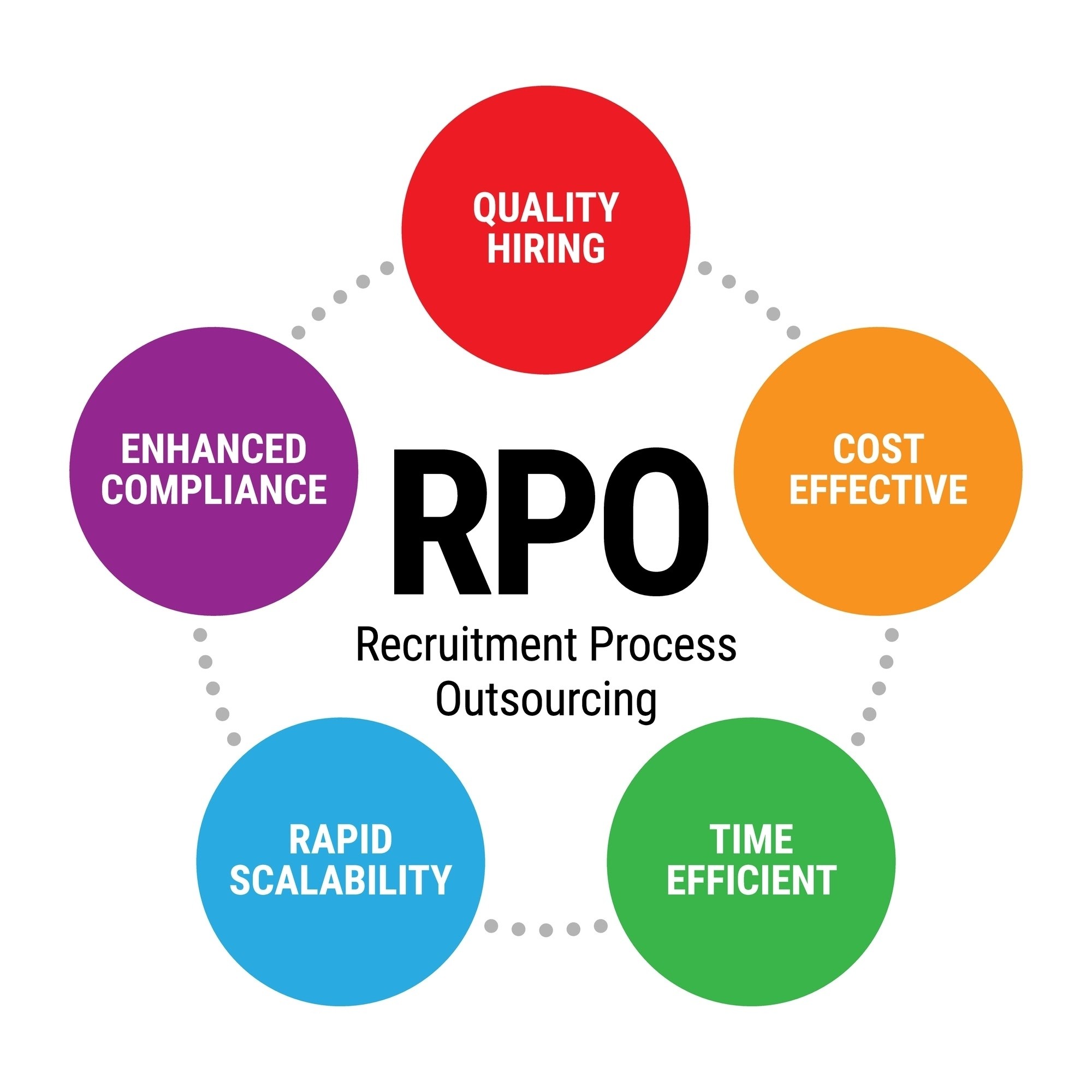
Outsourcing recruitment to an RPO partner can significantly reduce the overall RPO cost of hiring. While the RPO cost involves a fee, the total financial outlay is often lower than the combined expenses of internal recruiters, job board subscriptions, and the costs of vacancies remaining open. The RPO provider is incentivized to make the hiring process efficient, often leading to a substantial reduction in cost-per-hire. This strategic recruitment outsourcing approach also frees up internal resources, allowing your core HR or recruitment team to focus on broader strategic talent acquisition initiatives rather than day-to-day recruitment activities.
I guess another smaller question is WHERE can I do RPO - and I wrote this article on Nearshore Outsourcing - finding a geographical location that plays well to your timezone, aligns with your company culture and saves you budget.
What Are the Key Types of RPO and Which RPO Recruitment Models Are Right for My Business?
There are several types of RPO models available, designed to fit various corporate structures and hiring demands. The most comprehensive is end-to-end RPO, where the RPO provider takes over the entire recruitment process from requisition to onboarding, covering all aspects of the recruitment lifecycle. This is ideal for organizations looking for a complete overhaul of their recruitment function. A highly experienced RPO provider will implement a holistic recruitment solution designed for your long-term needs.
RPO falls under the umbrella of Business Process Outsourcing (BPO), wrote an article about BPO
here
Another common structure is project RPO. Project RPO also focuses on a specific, time-bound or volume-based recruitment effort, such as a major company expansion, a new product launch requiring specialized staff, or a campaign to fill hundreds of entry-level positions. For companies that only need assistance during peak times, on-demand RPO offers targeted support where the RPO provider supplements the existing recruitment team for short periods or specific activities like candidate source or screening. Finally, the flexible RPO model allows companies to outsource specific recruitment processes to an external party, such as only candidate source or recruitment marketing, while keeping other functions in-house. RPO providers offer a range of RPO services to accommodate diverse client needs.
How Does an RPO Provider Work and What Does the RPO Partnership Involve?
An RPO provider functions as a strategic extension of your company, not merely a transactional vendor. The relationship is built on a deep RPO partnership that begins with the RPO provider gaining a thorough understanding of your culture, values, and business goals. They often integrate their staff and recruitment technology with your systems, giving them full visibility into your current and future hiring needs. The RPO provider’s goal is to standardize and optimize your existing recruitment processes, applying best practice methodology to every step.
The scope of RPO work typically involves continuous process improvement. RPO providers take ownership of the complex and time-consuming tasks within the talent acquisition process, such as developing job descriptions, executing targeted candidate source strategies, conducting initial interviews, and managing all candidate communications. They work closely with your hiring managers to ensure alignment on candidate profiles and hiring timelines.
Why Is Selecting the Right RPO Partner Crucial for Talent Acquisition Success?
Obviously, if RPO is so great and has many benefits, then selecting the RIGHT RPO is really important. Since the RPO provider will be representing your brand and managing your sensitive recruitment processes, their cultural fit and industry experience are paramount. You must find a strong RPO provider who can demonstrate a proven track record of success in your specific sector or geography—especially if you require global recruitment. Partnering with an RPO should feel like adding a highly skilled, specialized team to your organization.
When choosing an RPO, you should evaluate potential RPO companies based on their RPO experience, the strength of their recruitment technology platform, and their ability to be truly flexible, in fees, time to hire, guarantees on placements, etc. A strong RPO partner will offer a customizable recruitment solution that scales up or down based on your dynamic hiring demands. You are essentially entrusting your future workforce to them, so rigorous due diligence on their service level agreements, reporting capabilities, and commitment to data security is non-negotiable. Recruitment to an RPO partner is a major strategic decision that requires a long-term vision.
What Is the Typical RPO Cost and How Much Does RPO Save Compared to Traditional Recruitment?
The RPO cost can vary significantly, depending on the types of RPO model chosen (end-to-end, project, or on-demand), the volume of hiring, the complexity of the roles, and the geographical scope (local vs. global RPO). RPO companies typically charge through one of three main pricing models: a management fee (a fixed monthly fee), a cost-per-hire fee (a variable fee for each successful placement), or a hybrid model combining both. The cost of an RPO solution depends entirely on the scope of RPO services and the guaranteed outcomes.
In comparing the RPO cost to traditional recruitment, the savings are often substantial, though they are not always immediately obvious. While an internal recruiter’s salary is a fixed cost, an RPO provider often delivers a lower cost-per-hire due to economies of scale, superior recruitment technology, and optimized recruitment processes. They also reduce the intangible, yet significant, cost of vacancies—the loss of productivity and revenue when roles remain unfilled. A successful RPO can help to reduce time-to-hire by leveraging their network and expertise, ensuring a faster return on investment and a superior quality of hire compared to using multiple, disconnected recruitment agencies. This cost efficiency is a major draw to recruitment outsourcing.
What Essential Questions About RPO (RPO FAQs) Should I Ask a Potential RPO Provider?
Before committing to a provider, asking the right questions about RPO is paramount to ensure a successful RPO partnership. A few key inquiries include:
"What specific metrics and key performance indicators (KPIs) will you use to measure success, and how often will you report on them?"
"How will you integrate your systems and people with our existing recruitment team and HR technology?"
You also need to understand their approach to representing your employer brand; ask, "What specific steps will you take to ensure a consistent and positive candidate experience that reflects our company culture?"
"Can you provide case studies of similar organizations in our industry or geographical area where you successfully filled hard-to-source roles?"
"What is your approach to diversity and inclusion in the recruitment process?"
By dibving into these RPO faqs, you gain insight into the RPO provider’s expertise, their commitment to best practice, and their ability to deliver a tailored recruitment solution. The responses will help determine if they are the best RPO company for your needs.
How Do I Know If I Should Outsource Recruitment and Choose the Right RPO for My Recruitment Strategy?
The decision to consider outsourcing and choose the right RPO should be driven by strategic necessity. If your recruitment team is constantly overwhelmed, if your time-to-hire is rising, or if you consistently struggle to recruit great talent in niche areas, then yes RPO is a viable solution. Companies often realize they need RPO when their current recruitment processes cannot scale with their growth or when they need immediate access to recruitment expertise that would be too costly or time-consuming to build internally.
To align the RPO with your recruitment strategy, you must first assess your internal gaps. If the need is for temporary, high-volume hiring (like seasonal staff), a project RPO or an on-demand RPO model might be the right RPO choice. If your organization requires a complete transformation of its recruitment function and a long-term strategic shift, a full end-to-end RPO may be necessary.
By clearly defining your hiring demands and the weak points in your current recruitment processes, the path to partnering with an RPO company becomes clearer.
What Distinguishes the Best RPO Companies from Standard RPO Companies?
The best RPO service providers go beyond basic transaction processing. They use sophisticated data analytics to predict future hiring needs, offer strategic workforce planning, and bring the latest recruitment technology and innovative recruitment processes to the table. They are proactive, advising on changes in the talent market and helping to refine your recruitment strategy.
Want know more about the economics and stats behind RPO? Check out this article about RPO from 2023 to 2030
A hallmark of a superior RPO solution is their commitment to enhancing your employer brand. They understand that every candidate interaction, regardless of the outcome, impacts your reputation. The RPO provider will help to craft compelling recruitment marketing and candidate communication strategies. Ultimately, the best RPO companies are those that deliver measurable, long-term improvements in quality of hire and recruitment process outsourcing efficiency, transforming your recruitment function into a competitive advantage.
How Can an RPO Provider Elevate Our Employer Brand and Improve the Hiring Process?
An RPO provider significantly enhances your employer brand by ensuring a highly professional, consistent, and positive experience for every candidate throughout the hiring process. Because they focus exclusively on recruitment processes, RPO specialists are experts at candidate engagement and communication, often providing feedback and maintaining contact in ways that busy internal teams cannot. This dedicated focus on the candidate journey reflects positively on your company, even for unsuccessful applicants, turning them into potential future candidates or customers.
Improving the entire recruitment process is another major contribution. An effective RPO solution implements standardized and optimized workflows, reducing the delays and inconsistencies often found in traditional recruitment settings. From source and screening to interview scheduling and offer delivery, the RPO model creates a seamless, efficient end-to-end process. This operational excellence minimizes candidate drop-off and shortens time-to-hire, ensuring that your organization secures the best talent faster than competitors, thereby reinforcing your reputation as an employer of choice.

Find Your Next Talent
Hire South Africans in Days not Weeks, and only pay after 4 weeks
Or schedule a call with Bojan.